
Become a Mason Bee Foster Friend

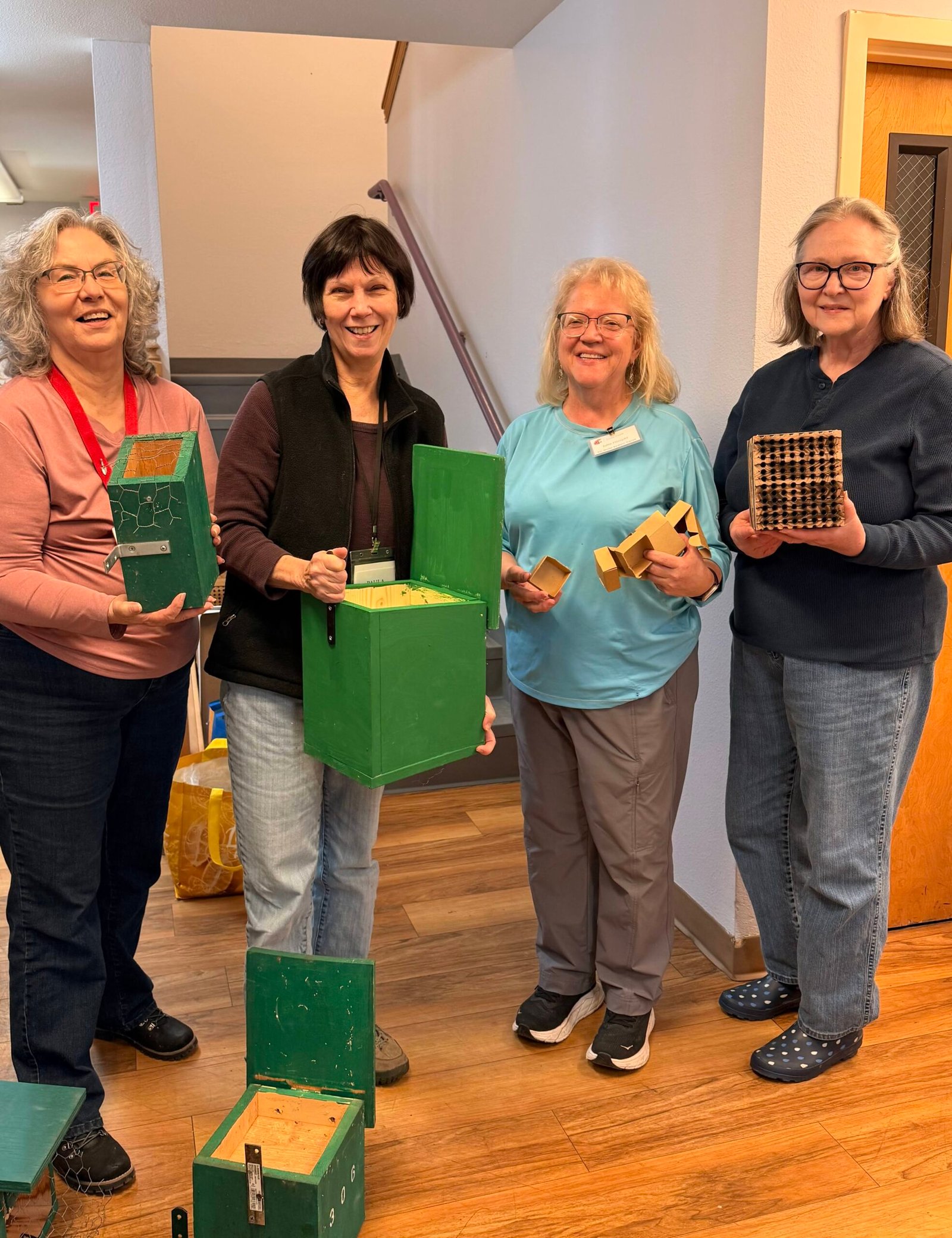
Our Mason Bee team is committed to providing support for the protection and expansion of the mason bee population through our Mason Bee Foster program. Mason bees contribute to the spring pollination of orchards and other plants. With enthusiasm, our 20+-person team demonstrates its many talents in community outreach, providing education, performing hands-on building projects, and distributing and collecting bee houses, nesting materials, and cocoons.
Our Story
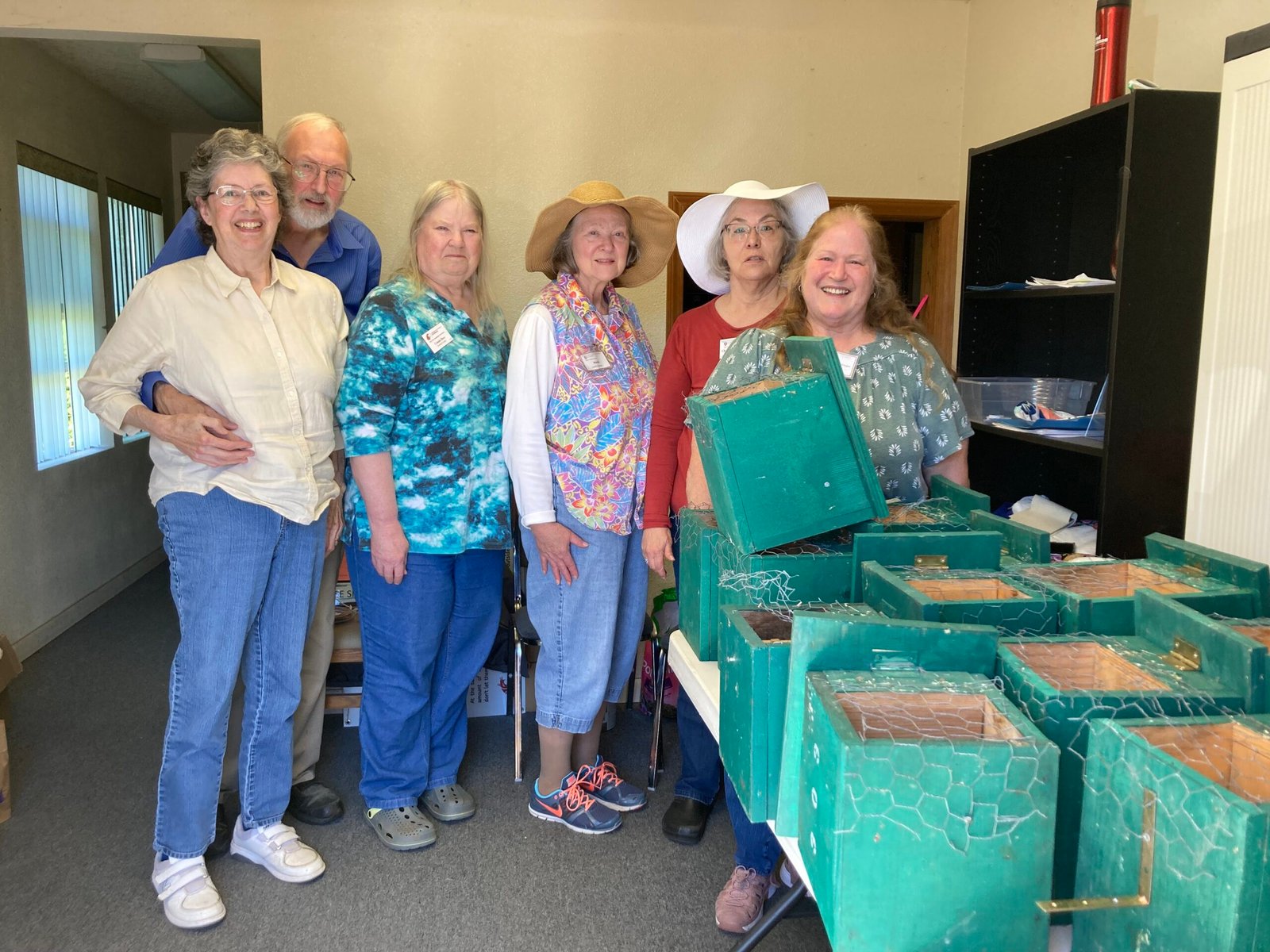
Here is a bit of background. We have been a team for about 2 years, but it all started with Billie and Gary Bevers. They started their own business and foster program about 15 years ago. Not only did they build community knowledge, they drove to the different foster locations to place the houses in the appropriate locations. Gary made the bee houses and provided the nesting materials and cocoons. With cordless drills in hand, Gary and Billie loaned the materials and bees to the fosters at no charge.
We Provide Mason Bee Kits
Our Annual Mason Bee Foster Process
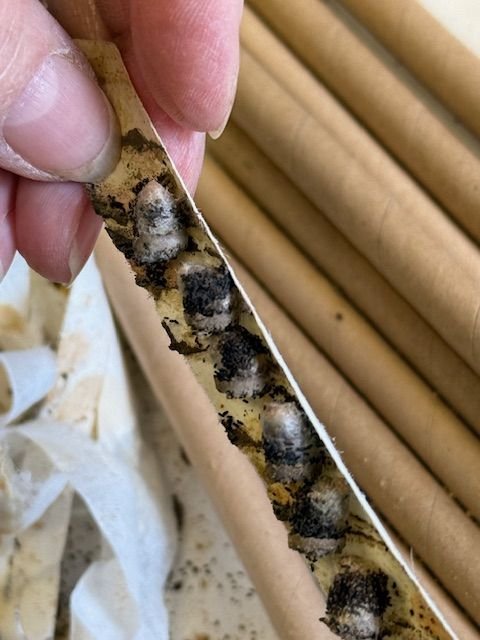
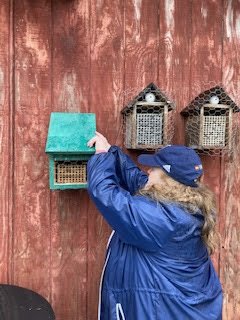
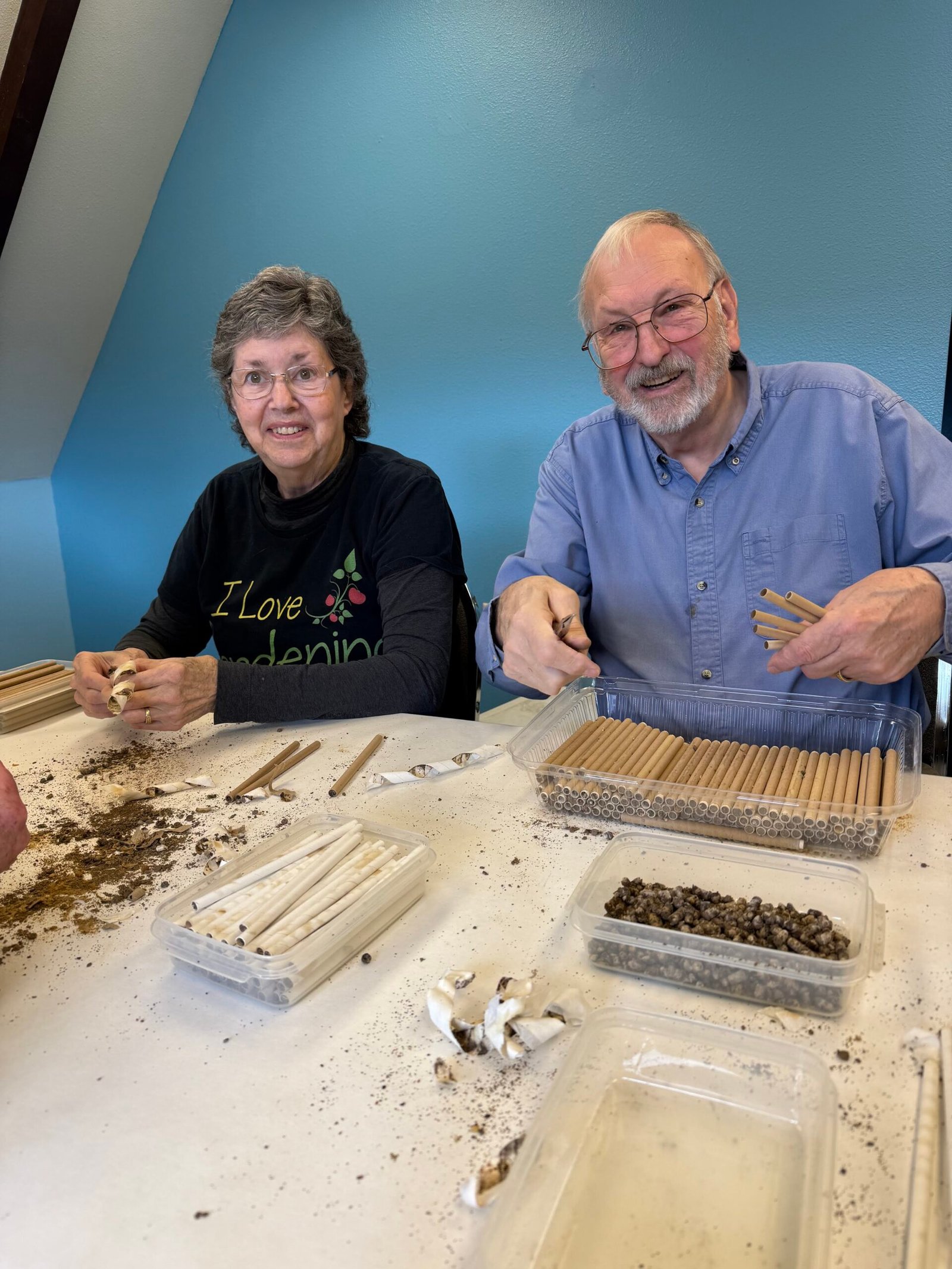
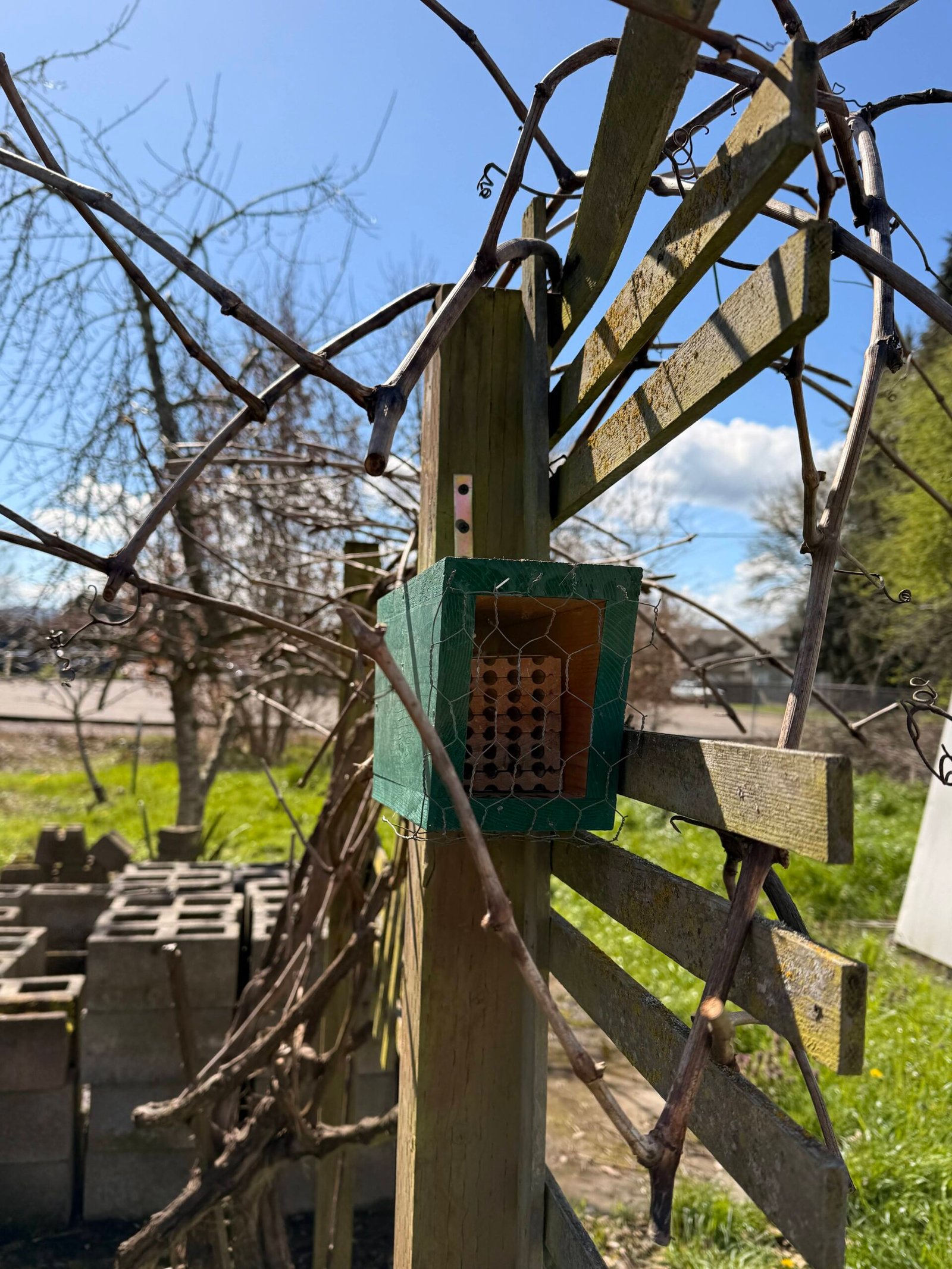
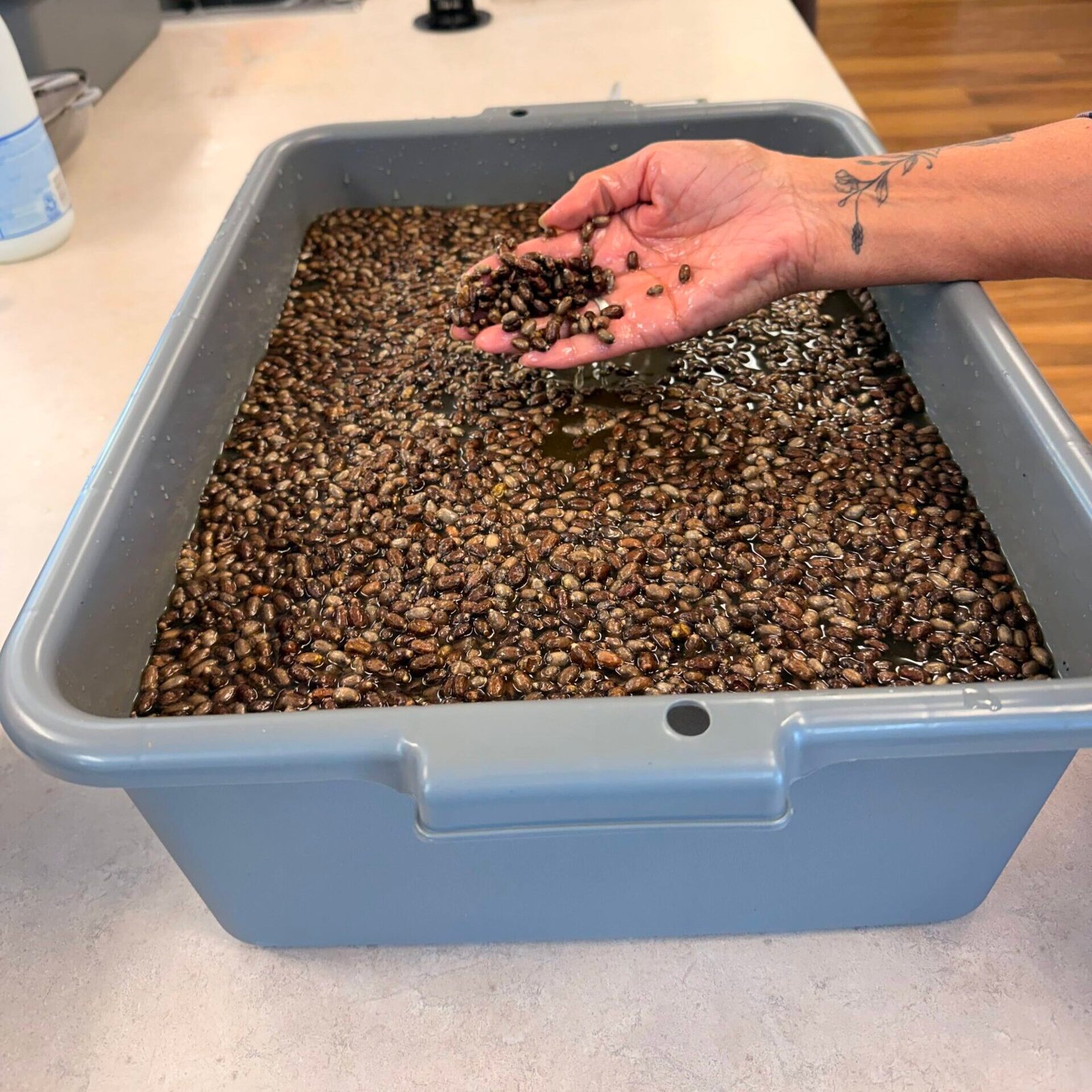
Our volunteers carefully craft or repair mason bee homes to be placed at foster locations, along with nesting materials and cocoons. At the foster locations, the bees hatch and produce the next generation. Six to eight weeks after initial delivery, the houses are collected with the new bee larvae and stored until the bee larvae turn into cocoons. Mature cocoons are cleaned and inspected to ensure proper health, and then stored until the annual cycle starts again.
Our annual process covers four counties with about 80 bee “foster parents.” We distribute approximately 120 bee houses. In 2025 we fostered out about 4,000 cocoons and later harvested 10,334 bee cocoons—a great return.
How to Sign Up
Information will be provided in the spring for those interested in hosting mason bees.
The B’s of Mason Bees: Biology and Basics
Biology and Life Cycle
Mason bees are about the size of a honey bee, fuzzy, stocky in shape, and blue to black in color. Females are larger than males. Males can be differentiated by their longer antennae, white on their faces, and a lack of a stinger.
Mason Bees emerge in March/April, and mate shortly after. Eggs are laid from April through May, and typically hatch in May. Mason Bee larvae spin cocoons in June and spend July through September in metamorphosis. Hibernation begins in September, and the adult bee stays hibernating in the cocoon until March.
Nesting and Habitat
- Mason Bee nests should face south, east, or southeast, and be elevated 3 to 5 feet from the ground.
- Protection from the wind and rain is important, as well as access to forage and mud.
- Forage essentials include Big Leaf Maples and pollen and nectar from composite flowers.
- Access to mud within 30 feet of their shelter is important for nest building.
Why Mason Bees?
It’s no secret that there is widespread concern about the decline in bees. Their pollination services are essential to our food crops and native plants. Mason bees are native, nonaggressive pollinators that are easily hosted in a backyard setting. Although they are solitary, Mason bees are considered super pollinators and have 130 types in the Pacific Northwest.
Mason Bee Learning Library
Watch Presentations on YouTube
View PDF Presentations
Additional Resources